Meet
 Mira
ASHM’s new AI-powered clinical guidelines assistant, designed to help clinicians find trusted guidance faster and support evidence-based, patient-centred care.
Built exclusively on ASHM’s STI Management guidelines, MIRA provides answers grounded in approved clinical guidance rather than general internet sources.
MIRA only answers using the Australian STI Management Guidelines, not general medical knowledge or external sources. Every response is checked against the guideline content and linked to the supporting source text, so clinicians can see exactly where the information comes from.
Like any AI tool, MIRA may occasionally make mistakes and should be used to support, not replace, clinical judgement. Always refer to the guidelines and apply your professional expertise when making clinical decisions.
How it works
-
Guideline based answers
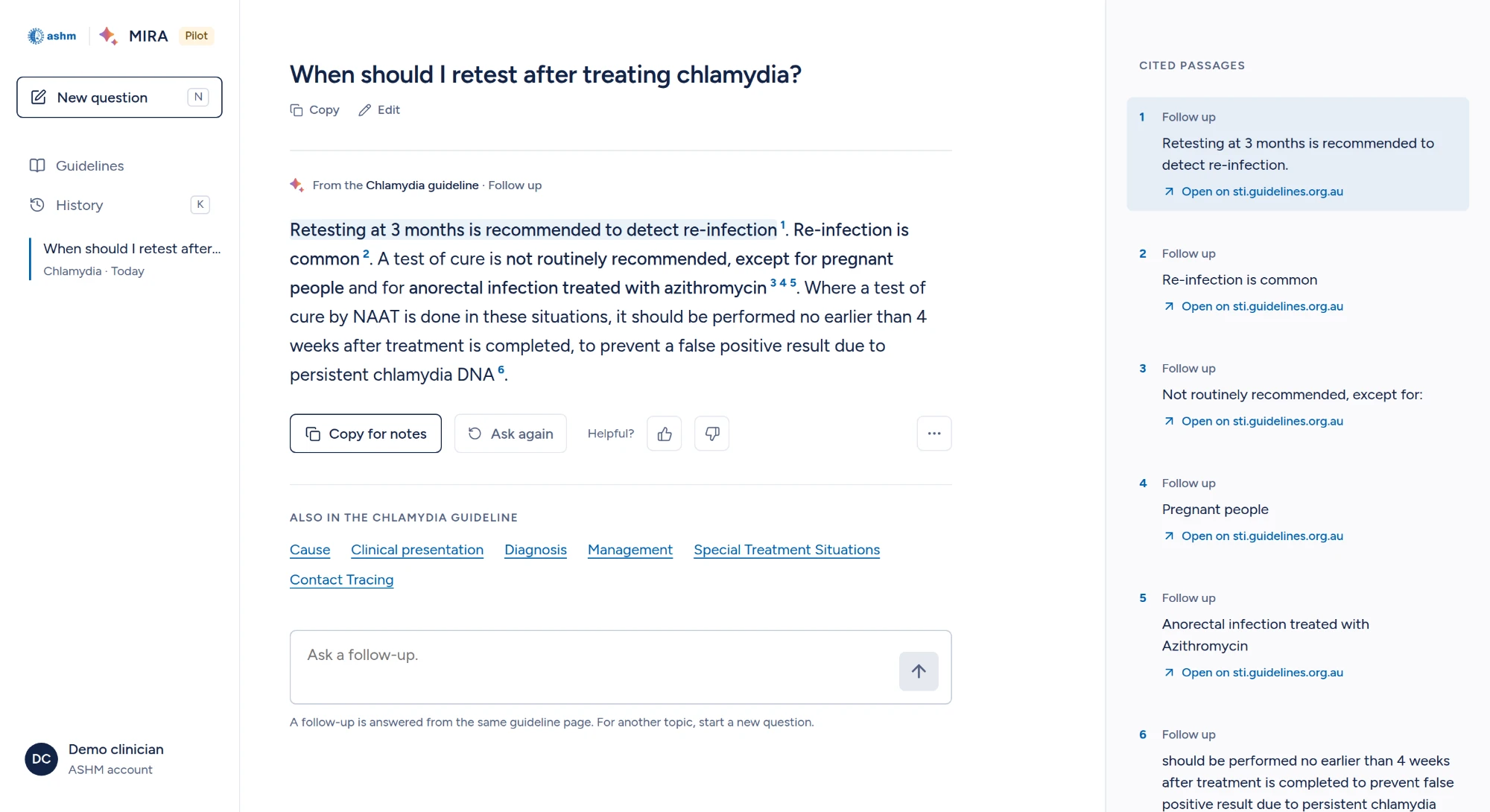
Every response generated is exclusively from the Australian STI Management Guidelines, providing trusted, evidence-based information to support your everyday clinical knowledge.
-
Check the source
Every answer cites the guideline passages it used and the version of the guideline they come from. Open a citation to read the exact wording, then follow the link to read it in context.
-
Ask a follow up
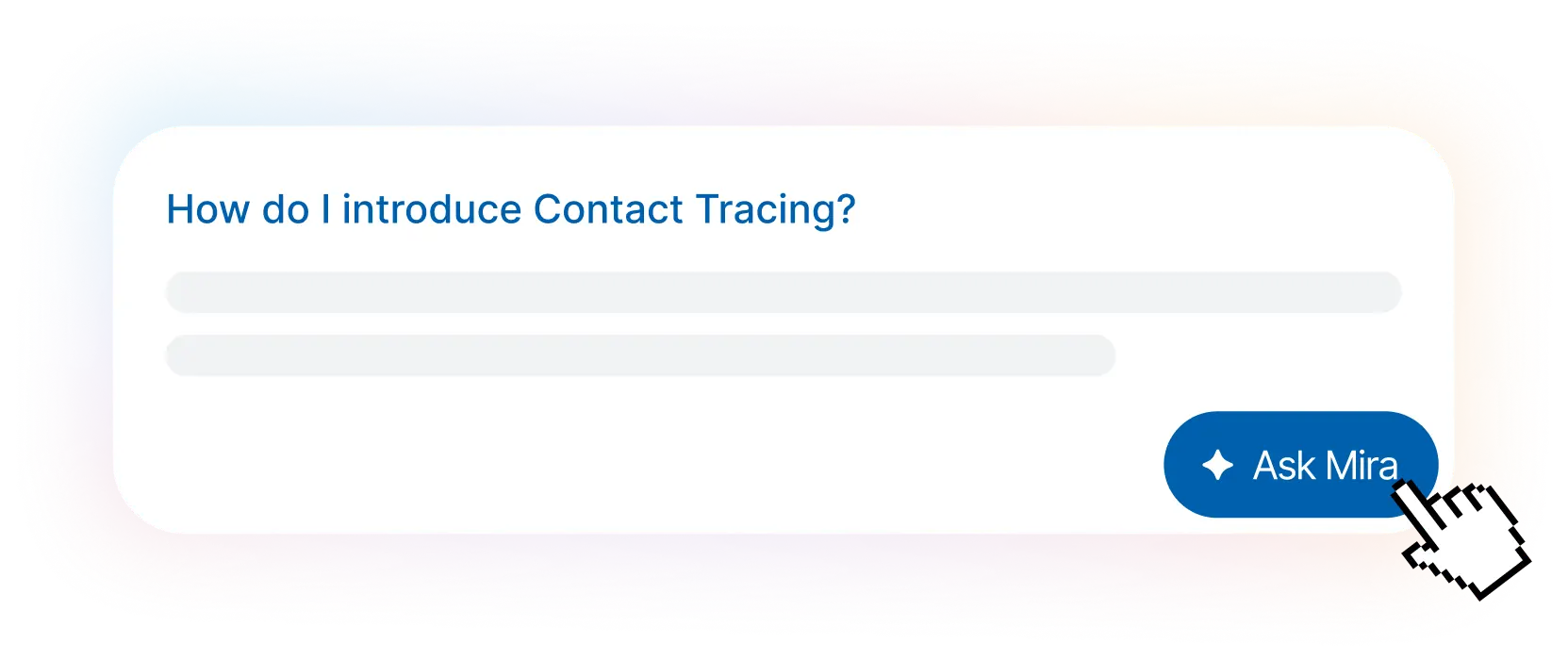
Type your clinical question in plain language, just as you would ask a colleague. MIRA understands conversational questions and follow-up queries, helping you find relevant guidance faster.
Getting access to MIRA
-
Register your interest
Log in or create an account on this website, then choose Join the waitlist on your account page.
Register your interest -
We review your request
MIRA is in a closed pilot, opening to more users in stages. We review each request and email you an invitation when your access is ready.
-
Start asking
Sign in with the email address your invitation went to, choose Start using MIRA and complete four short onboarding steps. Then open the workspace and ask your first question.
Never enter patient names, dates of birth, addresses, Medicare numbers, or anything else that could identify a patient or another person.
Questions about MIRA
Who can use MIRA?
MIRA is for health professionals who use the Australian STI Management Guidelines in their work, such as GPs, nurses and sexual health physicians.
It is in a closed pilot. Register your interest and we will grant you access as we open it to more users.
Register your interestHow is MIRA different from other AI tools?
A general AI chatbot answers from whatever it learned in training, and it is hard to tell where an answer came from. MIRA answers only from the Australian STI Management Guidelines. It quotes the passages it used and links to them. It declines questions outside the guidelines, and tells you when they only partly answer one.
Can I trust MIRA's answers?
Use MIRA as a fast way into the guidelines, not as the final word. The guidelines make the recommendations and MIRA shows you where they are. It can make mistakes, so read the quoted passage before you act on an answer. Clinical decisions stay with you.
What can MIRA help with?
STI and BBV testing, diagnosis, management, follow-up and contact tracing, as the STI Management Guidelines cover them. MIRA does not give patient-specific advice, and it is not a diagnostic or prescribing tool.
Where is my data kept?
MIRA and the AI model that writes its answers run in Australian data centres.
We record questions and answers to review how well MIRA performs. Text you type is held for a limited review window and then deleted. The Privacy Notice you accept before you start has the detail.